Have you ever felt like you were someone’s entire world, until suddenly you weren’t even worth a text back? One moment, you were everything. The next, you were nothing. Or did they make you feel like the answer to all their prayers, then treat you like the cause of all their problems?
From late-night phone calls and love songs, from “I can’t go a minute without you” declarations to suddenly feeling like a burden they had to carry, and after disappearing, after discarding you, they come back as if nothing ever happened, and you find yourself running into their arms, grateful? What you’re experiencing is not love, it’s the narcissistic abuse cycle.
If this sounds familiar, you may have unknowingly been pulled into one of the most psychologically destabilizing patterns in toxic relationships: the Idealize-Devalue-Discard cycle.
The Narcissistic Abuse Cycle Begins with Idealization
It begins like a fairytale. In the idealization phase, the narcissist places you on a pedestal so high, it feels surreal. You’re the best thing that ever happened to them. They say things like:
- “I’ve never met anyone like you.”
- “I think I’m falling in love with you.”
- “Where have you been all my life?”
You’re flooded with compliments, attention, and flattery. They mirror your interests, your values, your dreams. They become everything you didn’t know you were looking for. You feel seen. Known. Chosen.
Neurologically, your brain responds with a surge of dopamine and oxytocin. This is attachment on overdrive. You bond quickly, deeply—and most importantly, before any red flags have a chance to register.
But what you don’t realize is that this intense admiration isn’t about you. It’s about how you make them feel. You are the screen; they’re projecting their fantasy.
This idealization isn’t rooted in genuine discovery. It’s a curated illusion. One that’s specifically designed to hook you emotionally before trust has been earned. What seems like deep emotional resonance is actually a blueprint—they’re rapidly mapping your insecurities, hopes, and soft spots.
They may echo your traumas. Share eerily similar past experiences. Express values that align perfectly with yours. This alignment feels magnetic—fated, even. But it’s manufactured. What you experience as intimacy is, in fact, a calculated strategy. The more you share, the more they gather.
And crucially, they move fast. Faster than normal emotional intimacy develops. You might feel flattered that they’re opening up, saying you’re their soulmate, or suggesting you move in together after only a few weeks. But that’s not passion—it’s pressure dressed as intimacy.
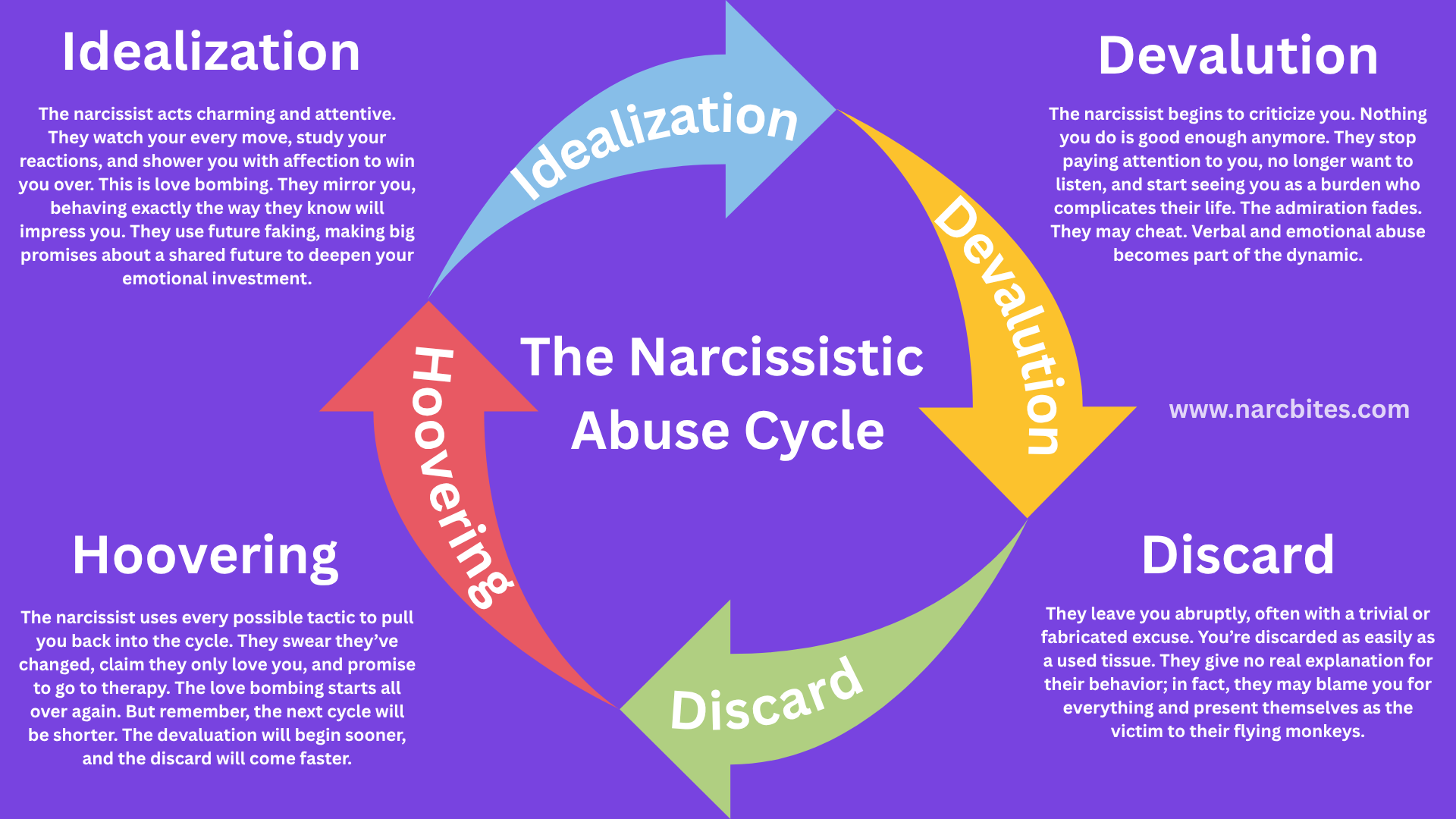
Devaluation in the Narcissistic Abuse Cycle
Then it shifts. Not always dramatically. Sometimes it’s a sigh. A rolled eye. A subtle insult dressed as a joke. But the tone changes.
You’re too sensitive. You talk too much. You’re not as exciting as you used to be.
They begin to withdraw. You can feel them slipping away, but you can’t quite explain it. So, you try harder. You apologize. You overcompensate. You become who you think they want, hoping to get back to that first version of them—the one who adored you.
This is where the psychological damage starts to deepen. You begin to self-correct, to question your worth, to internalize their dissatisfaction. It feels like love is slipping through your fingers, and you believe it’s your fault.
This phase is not just painful; it’s disorienting. The love bombing made you feel so valuable that the contrast is now unbearable. You start craving their approval, not out of love, but out of fear.
And here’s the dangerous part: every now and then, they throw you a breadcrumb. A compliment. A small gesture. Enough to keep hope alive. This is intermittent reinforcement at its most devastating. You start chasing the high again, without realizing you’re being conditioned.
You start to shape-shift. You tone yourself down. You question your memory. You edit yourself before you speak. You’re no longer showing up as who you are—you’re performing, hoping to prevent the next emotional withdrawal.
You may also notice your world shrinking. Friendships fade. Hobbies die off. Even your personality feels quieter. Less vibrant. Because you’re not living—you’re managing. Managing them, managing their moods, managing yourself.
How the Narcissistic Abuse Cycle Turns Love into Confusion
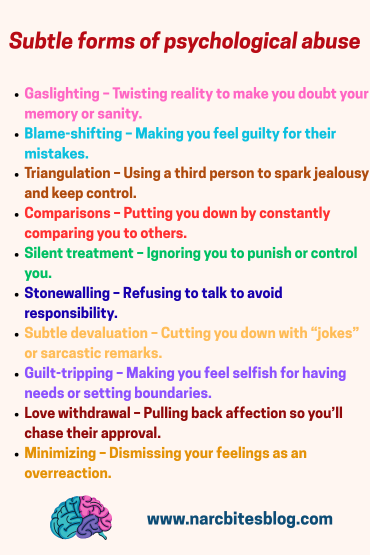
This is often when subtle forms of psychological abuse emerge—gaslighting, blame-shifting, triangulation. They may compare you to others: an ex, a friend, someone they ‘just happened’ to meet. These comparisons erode your confidence. You find yourself working harder just to feel like enough.
When they leave for someone else and then come back saying how much they appreciated having morning coffee in the garden with that person… suddenly, you find yourself liking coffee too.
The devaluation phase can last weeks, months, or even years. It can be cyclical, fluctuating between temporary warmth and cold dismissal. This is how the narcissistic abuse cycle sustains itself by keeping hope alive just long enough to keep the connection intact. You begin to associate love with unpredictability, believing that intensity equals depth. But it doesn’t. It equals instability.
And still, you believe love might return if you just hold on.
The Final Blow: Discard
Eventually, they discard you.
Maybe it’s abrupt. A cold goodbye. Silent treatment. Ghosting. Maybe it’s drawn out. A slow fade, riddled with indifference. Maybe they cheat, lie, or push you until you leave, just so they can say you gave up.
Regardless of the form it takes, the message is the same: you are no longer useful.
But here’s the twist. The discard isn’t always permanent. Sometimes, they come back. Not because they love you. Because they need something.
Attention. Validation. Control.
And the cycle begins again. Each round chips away more of your self-worth. Each return feels less like love, more like survival.
You might find yourself missing the good moments—even though they were always laced with manipulation. You might still crave their validation, even when you know it’s toxic. That’s the hook. That’s how deep this goes.
They might resurface during a vulnerable moment. A breakup. A loss. A moment of weakness. They know exactly when you’re most likely to respond. And they’ll come bearing apologies, nostalgia, and just enough charm to reopen the wound.
And if you let them back in? The cycle restarts, but faster. The idealization is shorter. The devaluation hits harder. And the discard cuts deeper.
A bond you can’t break
This cycle isn’t random—it’s methodical. It follows a psychologically predictable pattern:
- Idealization builds the dependency. You’re lifted so high that you believe no one else could possibly make you feel this way.
- Devaluation confuses and disorients. You’re pushed just far enough to keep trying, but not so far that you leave.
- Discard strips your identity. When they withdraw their attention, you don’t just miss them—you miss the version of yourself you were when you were “loved” by them.
It’s a psychological trap designed to undermine your sense of self while keeping you emotionally tethered. And each cycle trains you further to tolerate emotional neglect and mistreatment.
You begin to equate pain with passion. Chaos with chemistry. You stop trusting your own perception. Because nothing about this connection is stable—but it is familiar. Especially if you were raised in environments where love was conditional.
Why It Hurts So Deeply
This cycle is trauma disguised as intimacy. It mimics secure attachment only to dismantle it. Your brain becomes hooked not on the person, but on the emotional rollercoaster they create.
There’s also a cognitive dissonance at play: your mind can’t reconcile how someone who once treated you like a treasure now sees you as disposable. So you try harder to make sense of it. But there’s no sense to be made.
Because you were never truly seen. Only used.
The pain lingers because it triggers old wounds—abandonment, unworthiness, betrayal. It mirrors childhood dynamics where love was inconsistent or had to be earned. And it awakens a desperate hope: maybe if you’re good enough, they’ll come back and love you right.
But they won’t. Because they never did. What they offered wasn’t love. It was control disguised as connection. Attention that came at the cost of your peace. Intensity mistaken for intimacy.
Your nervous system learns to anticipate chaos. And even when you leave, your body might still respond to those old patterns—seeking, longing, bracing. You might even begin to mistrust healthy relationships. Safety feels boring. Kindness feels suspicious. That’s the residue of trauma bonding. It clouds your radar and makes chaos feel like home.
Breaking this bond requires more than distance. It requires emotional detox. Self-reclamation. And a deliberate choice to stop outsourcing your worth to someone else’s opinion.
Breaking the Narcissistic Abuse Cycle
Recognizing the cycle is the first step. Naming it takes away its power. When you see the pattern, you stop blaming yourself. You stop chasing validation from someone who never offered love—only control dressed as affection.
Red flags? Sure, they’re there. But you’ve probably seen them already. What matters now is not the warning signs, but the clarity that they were never going to change.
It’s not about identifying every toxic trait, it’s about noticing what it costs you to stay. Are you walking on eggshells? Silencing yourself? Dismissing your needs? That’s the true measure.
Love isn’t supposed to feel like a test. That’s where healing starts.
Leaving may not feel triumphant. It may feel like failure. But what you’re actually doing is refusing to play a game rigged against you. You don’t need to earn love. Especially not from someone who made you forget your own worth just to feel like they had some.
Because here’s the truth: anyone who truly loves you will never make you question your reality, your value, or your voice.
If you’re tired of focusing on him and going over everything that happened,
then it’s time to start focusing on the future and on yourself.


You understand what happened. Now what?
Where understanding ends, action begins…
A workbook to help you do the inner work that thinking alone can’t finish.
More than 220 practical exercises across 110+ pages.
More Info